
Why a Ladder Rack for High Roof Van Is a Safety and Productivity Decision You Can't Ignore
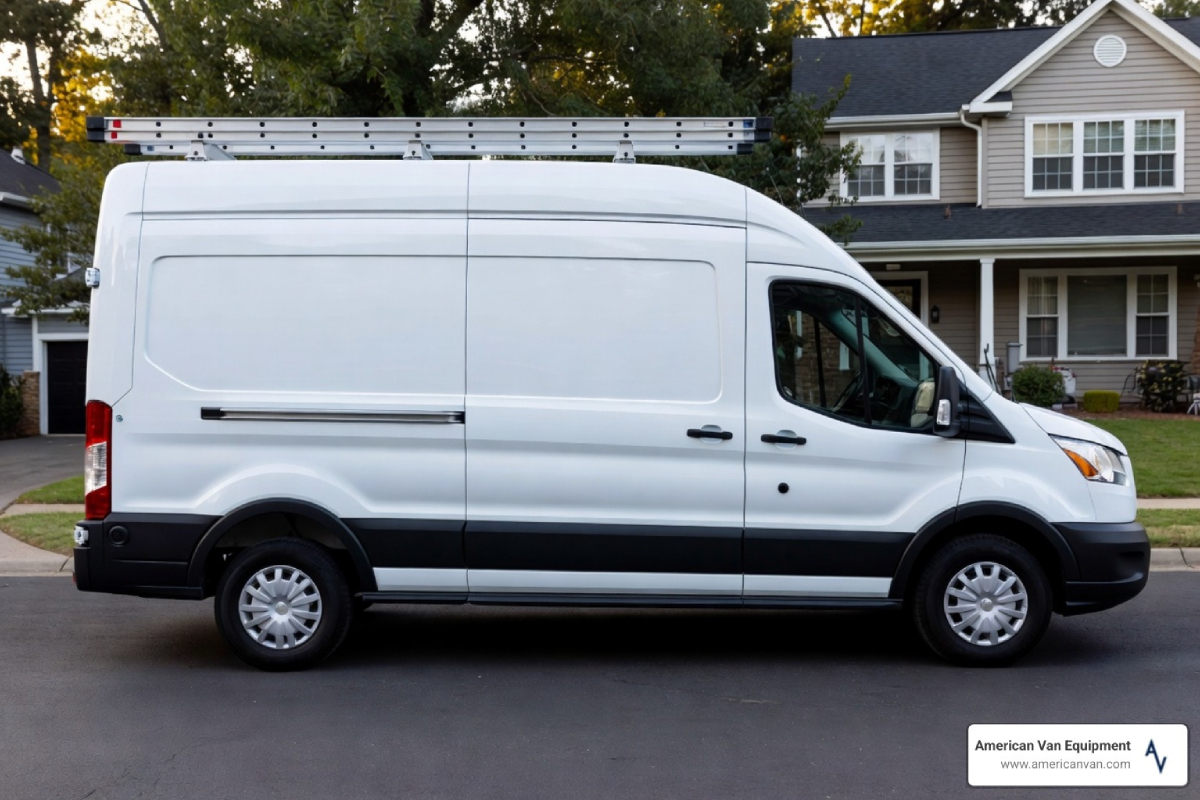
A ladder rack for a high roof van is one of the most important upgrades you can make to a commercial cargo van - and choosing the wrong one creates real safety and liability risks for your crew.
Here are the best ladder rack options for high roof vans at a glance:
| Rack Type | Best For | Drop Distance | Price Range |
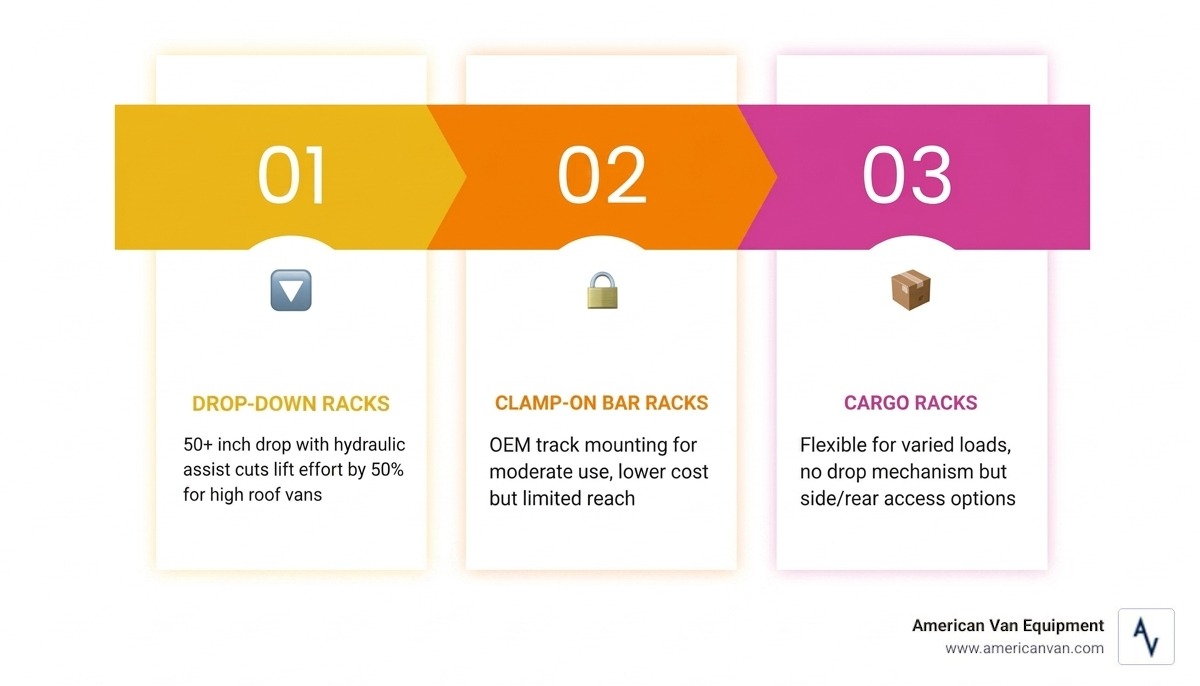
| Drop-Down (e.g., Premium Mechanical Systems) | Daily heavy ladder use, high roof vans | 50+ inches | Above $1500 |
| Clamp-On Bar Rack (e.g., Heavy-Duty Aluminum Bars) | Moderate use, OEM track mounting | Standard height | Lower cost |
| Cargo Rack | Varied loads, flexible use | Not applicable | Moderate |
| Interior Carrier | Short ladders (6-8 ft), weather protection | Inside van | Budget-friendly |
High roof vans like the Ford Transit, Mercedes Sprinter, and RAM ProMaster have roof heights that push the limits of what a worker can safely reach. Lifting a heavy extension ladder overhead - multiple times a day - is one of the leading causes of on-the-job shoulder and back injuries. According to OSHA ladder safety guidance, proper equipment handling is essential to prevent workplace falls and strains.
The core problem is simple: standard ladder racks were not designed for vans this tall. Without a purpose-built solution, workers are forced to stretch, climb, or strain just to load and unload equipment. That is a compliance risk, a health risk, and a productivity drain.
In 2026, fleet managers and contractors have more purpose-built options than ever - from hydraulic drop-down systems that cut lift effort by up to 50%, to no-drill clamp-on racks that protect your vehicle's resale value.
At American Van Equipment, we've spent years developing and evaluating fleet upfit solutions - including ladder rack for high roof van systems - to help commercial operators work safer and smarter. In this guide, we'll break down every major rack type, key specs, and what actually matters when you're choosing a system for your fleet.
High Roof Ladder Rack Types
Compare key systems for safe ladder access on tall vans
Understanding the Ladder Rack for High Roof Van
When we talk about a ladder rack for high roof van configurations, we are dealing with a unique set of physics. A standard low-roof van might sit around 80 inches high, but a high-roof Ford Transit or Mercedes Sprinter can easily tower over 100 inches. At that height, the roof is no longer a storage surface; it’s a geographical challenge.
For a technician standing on the ground, reaching a ladder stored nearly nine feet in the air is physically impossible without assistance. This reach limitation leads to dangerous "improvised" loading techniques balancing on tires, standing on bumpers, or using a second ladder just to reach the first one. These actions significantly increase the risk of falls and repetitive strain.
A professional ladder rack for high roof vans solves this by focusing on ergonomic accessibility. Instead of requiring the user to reach the roof, these systems bring the roof to the user. Side-loading benefits are massive here; by utilizing the ergonomic ladder rack, technicians can remain firmly on the ground while the rack handles the vertical travel. Whether you are hauling heavy fiberglass extension ladders or standard A-frames, the right upfitting choice ensures that your van's height remains an asset for interior storage without becoming a liability for exterior equipment.
Comparing Types of High Roof Rack Systems
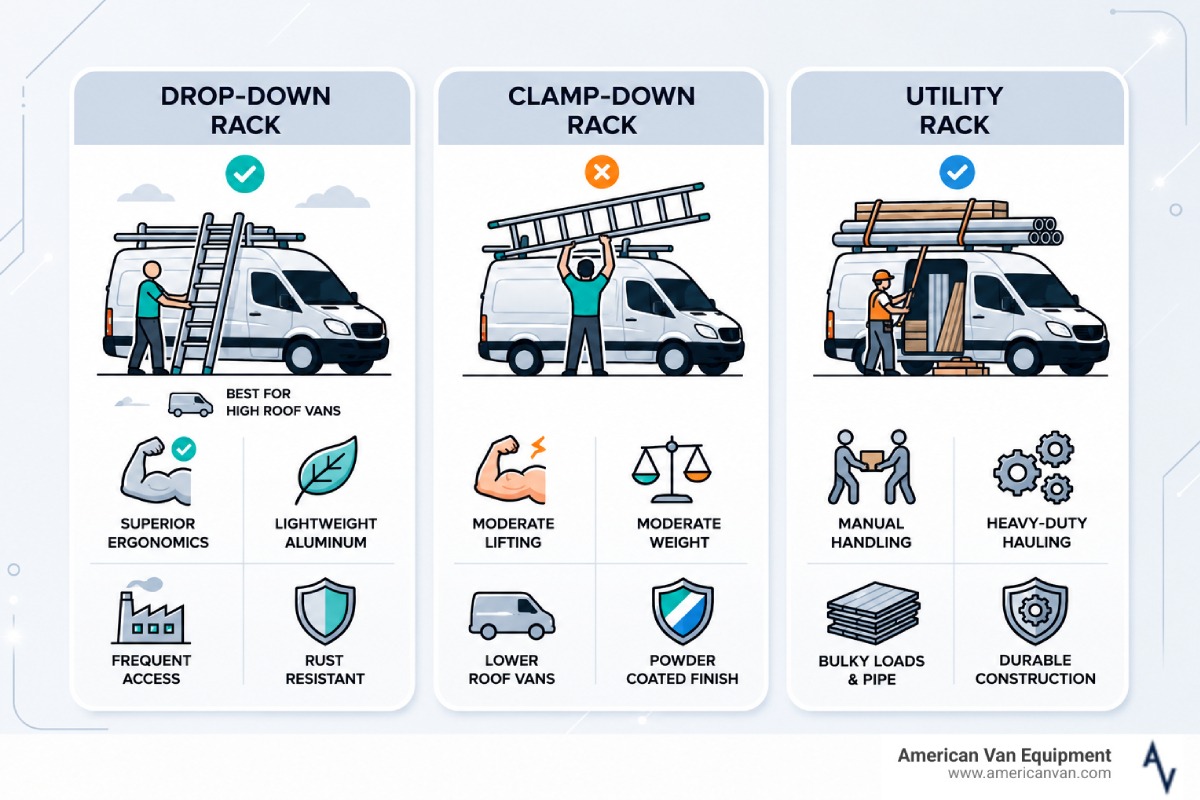
Choosing the right ladder rack for a high roof van depends largely on how often you access your tools and the specific height of your vehicle.For example, lockdown ladder racks securely lock ladders in place during transit to help prevent shifting or theft, while drop down ladder racks lower ladders to an easier loading height for safer and more convenient access Not all racks are created equal, especially when you have to bridge a five-foot gap between the roofline and a comfortable chest-height grip.
| Feature | Drop-Down Systems | Clamp-On / Grip-Lock | Cargo / Utility Racks |
| Primary Mechanism | Hydraulic/Mechanical Pivot | Gas-Spring Clamping | Stationary Bars |
| Accessibility | Maximum (Lowers to user) | Moderate (Requires reach) | Low (Requires climbing) |
| Vertical Travel | Up to 50 inches | None | None |
| Best Use Case | High Roof Vans / Daily Use | Mid-Roof / Frequent Use | Bulk Material / Rare Use |
| Installation | No-drill / OEM Rail | No-drill / OEM Rail | Universal / Gutter Mount |
Rotation Systems and Slide-Down Extensions
For the tallest vans in the fleet, a simple rotation isn't enough. Premium mechanical systems utilize a two-stage motion. First, the rack rotates the ladder outward, and then it slides it down an additional 24 to 50 inches. This "Max-Drop" technology is essential for high-roof models to ensure the ladder clears the side of the van and lands at a safe working height.
Interior Ladder Carriers
If you only carry 6-foot or 8-foot step ladders, you might not need the roof at all. Interior ceiling-mounted carriers allow you to utilize the cavernous "dead space" inside a high-roof van. This keeps your equipment out of the elements while leaving your floor space open for van shelving.
Rear Roller Bars and Side Access
If you opt for a stationary utility rack to carry lumber or scaffolding, a rear roller bar is a non-negotiable accessory. It allows you to lean long materials against the back of the van and roll them onto the rack, preventing the "drag and scrape" that ruins both your van's finish and your equipment.
Key Features of a Premium ladder rack for high roof van
When you’re investing in a ladder rack for a high roof van, the details in the hardware determine whether the rack lasts two years or twenty. At American Van Equipment, we’ve seen how the elements in Houston or the winters in Lakewood, NJ, can punish inferior materials.
Aluminum vs. Steel
In 2026, aluminum will be the undisputed king of the high-roof market. Industry-leading manufacturers have moved toward all-aluminum racks because they are roughly 22% lighter than steel versions. Reducing "top-heavy" weight is critical for high-roof vans to maintain a safe center of gravity and improve fuel efficiency. Furthermore, aluminum offers natural corrosion resistance, which is vital for preventing those unsightly rust streaks down the side of a white van.
Hydraulic Assist and Load Capacity
A heavy-duty ladder rack for high roof van should do the heavy lifting for you. Look for systems with dual hydraulic dampers or spring-assist struts. These mechanisms can reduce the physical effort of raising a ladder by up to 50%. Most premium bars are rated for a 250-pound capacity per bar, with total system capacities reaching up to 500 lbs.
No-Drill Installation and OEM Compatibility
Your van is a major investment. Using no-drill installation methods that utilize factory-drilled holes or OEM roof rails (common on the Mercedes Sprinter and Ford Transit) preserves the structural integrity of the roof and protects the vehicle's resale value. High-quality racks will feature stainless steel hardware and an aerodynamic profile to minimize wind noise during highway hauls.
Safety and Ergonomics: The Case for Mechanical Assist
The transition from a standard rack to a mechanical assist ladder rack for high roof van is more than a convenience; it’s an insurance policy. Over 1,000,000 vehicles have been upfitted with professional mechanical racks, and the data is clear: ergonomic designs prevent injuries.
Injury Prevention and Shoulder Health
The most common injury for van technicians is rotator cuff strain. On a high-roof van, the angle required to lift a 70-pound extension ladder is anatomically punishing. Mechanical assist racks allow for one-hand operation, letting the technician maintain a stable "three points of contact" with the ground. By reducing the lift effort by 50%, you significantly lower the risk of repetitive motion injuries that lead to costly workers' comp claims.
Jobsite Compliance and Efficiency
Safety supervisors are increasingly requiring mechanical assist racks for high-roof vehicles to meet OSHA and corporate safety standards. Beyond safety, there is the efficiency factor. A solo technician can load or unload a 40-foot extension ladder in seconds without needing a "spotter" or a second set of hands. This speeds up the workflow and ensures the crew stays fresh throughout a long day of service calls.
Installation and Essential Accessories for High Roof Vans
Getting your ladder rack for a high roof van set up correctly is the first step toward long-term productivity. While some basic bar racks can be installed in about an hour, a full drop-down system is a precision piece of equipment.
- Installation Time: Expect a professional installation to take between 1.3 and 3 hours depending on the complexity of the drop-down mechanism.
- Mounting Channel Kits: Modern vans often require specific mounting channels (like those for a 148" wheelbase Transit) to distribute weight across the roof's reinforced ribs.
- Conduit Carriers: For those in the electrical or plumbing trades, a roof rack isn't complete without a conduit carrier. Look for square, rigid aluminum designs that prevent rolling and feature lockable PVC end caps to keep your materials secure and dry.
Essential Add-ons
- Step Ladder Kits: Most drop-down racks are designed for long extension ladders. If you carry a 6-foot step ladder, you’ll need a specific bracket kit to ensure it stays clamped tight.
- Ratchet Tie-Downs: Throw away the bungee cords. Integrated ratchet straps designed for your specific rack bars provide the only safe way to secure non-ladder cargo.
- Rubber Bar Guards: These inserts slide into the top channel of the crossbars to prevent metal-on-metal contact, which reduces "road shake" and keeps your ladders from being scratched during transit.
Conclusion
Since 1978, American Van Equipment has been dedicated to helping tradespeople work more effectively. Choosing the right ladder rack for high roof van is about more than just storage—it’s about protecting your most valuable asset: your crew. By investing in a high-quality, ergonomic drop-down system, you ensure that your Ford Transit, RAM ProMaster, or Mercedes Sprinter is a safe, professional, and highly productive tool.
Ready to upfit your high-roof van with a system built for the long haul? Our experts in Lakewood, Orlando, Houston, and beyond are ready to help you find the perfect fit.
FAQs
1 - What is the weight capacity of a ladder rack for a high roof van?
Most professional-grade aluminum racks are rated for 250 lbs per crossbar. For a standard two-bar setup, that gives you a 500 lb total capacity. However, you must always check your vehicle manufacturer’s roof load rating. Even if the rack can hold 500 lbs, your van’s roof might have a lower limit, especially on high-roof models where stability is a factor.
2 - Can I install a ladder rack for a high roof van without drilling?
Yes! In fact, we highly recommend it. Most modern high-roof vans come with factory-installed mounting points or tracks. High-quality systems use mounting feet that bolt directly into these points. This "no-drill" approach prevents roof leaks, stops rust before it starts, and makes it much easier to remove the rack when it’s time to sell the van.
3 - How much do high roof drop-down racks typically cost?
A premium ladder rack for a high roof van with a drop-down mechanism typically ranges from $1,500 to $4,399. While this is a higher initial investment than a $500 set of stationary bars, the long-term ROI is found in reduced injury claims, faster jobsite transitions, and the longevity of the aluminum components.