
Stacking Storage Bins Guide: Types, Uses, Features & Buying Tips
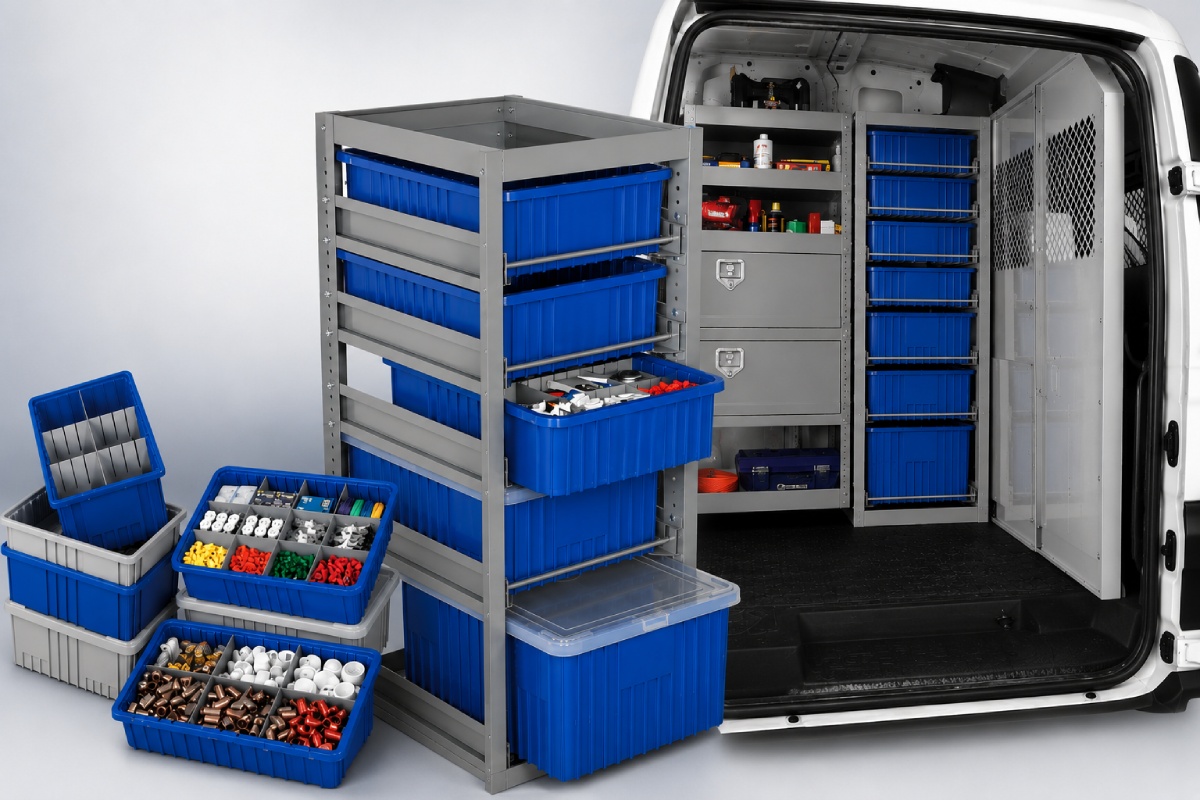
Stacking storage bins are one of the most space-efficient ways to organize tools, parts, and supplies — whether you're outfitting a work van, a warehouse shelf, or a garage.
Here's a quick overview of the most common types:
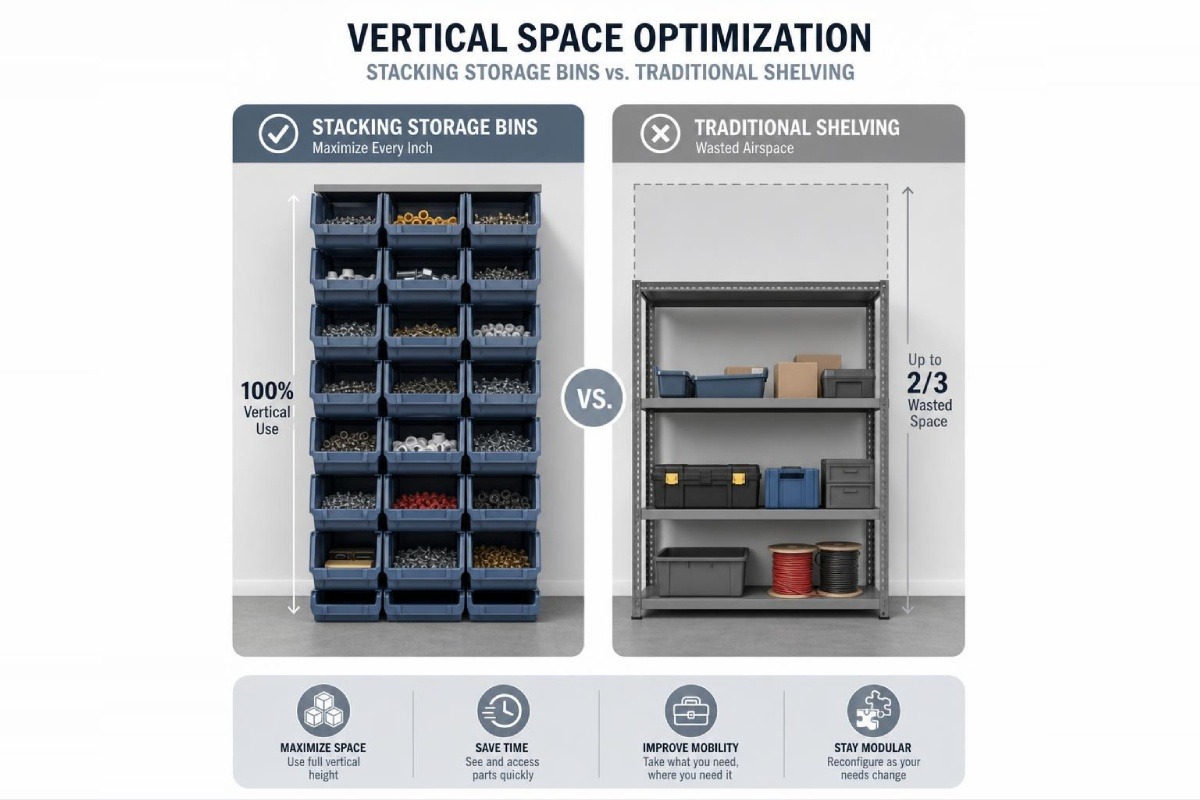
| Type | Best For | Key Feature |
|---|---|---|
| Open-front bins | Fast parts picking, workshops | No lid needed for access |
| Lidded stackable bins | Home, garage, seasonal storage | Dust and spill protection |
| Interlocking bins | Vans, mobile workspaces | Lock together to prevent shifting |
| Collapsible bins | Space-saving storage | Fold flat when empty |
| Steel stackbins | Industrial, heavy-duty use | Maximum load capacity |
Living or working in a disorganized space creates real problems. Technicians waste time searching for parts. Fleet managers face safety and liability risks when tools shift during transit. And anyone who's ever stepped on something that fell off an overstuffed shelf knows the frustration firsthand.
The good news: the right stacking bin system solves all of this — without a full facility overhaul.
I'm Mike McTamney, product manager at our commercial vehicle equipment company, where I lead the development of commercial-vehicle upfit solutions including van shelving and stacking storage bins for fleets and service professionals. In this guide, I'll walk you through everything you need to know to choose the right system for your setup.
Why Stacking Storage Bins Outperform Traditional Storage Solutions
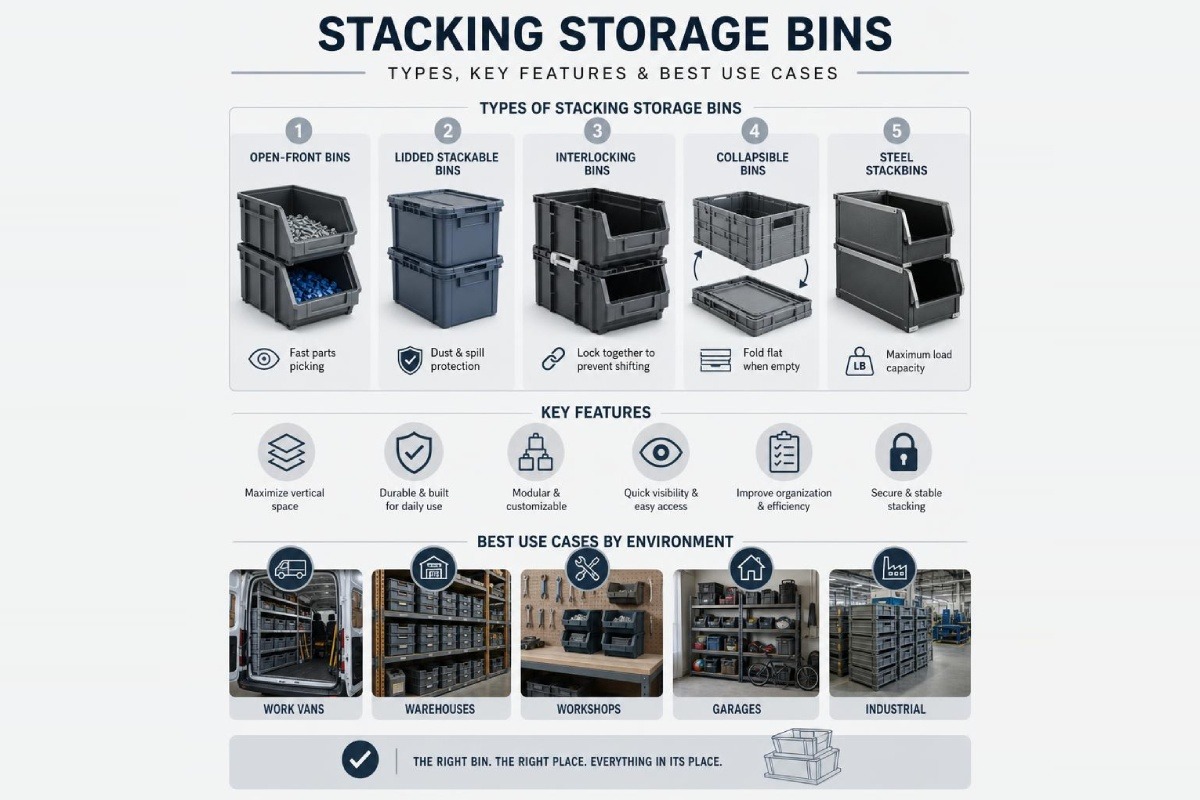
Traditional shelving systems are great, but they often leave a massive amount of wasted "airspace" between shelves. If you have a shelf that is 12 inches high but only fill it with 4 inches of loose parts, you have lost two-thirds of your storage potential.
By utilizing stacking storage bins, you can build a stable, modular storage wall that fills that vertical footprint completely. This maximizes your floor space and keeps your work areas clear. Instead of rummaging through a dark, overstuffed drawer, stacking bins make inventory control a breeze. You can see exactly what you have at a glance, preventing unnecessary repurchases and saving hours of search time.
| Storage Feature | Stacking Storage Bins | Traditional Shelving / Drawers |
|---|---|---|
| Vertical Space Use | Excellent (stacks to fill the entire height) | Poor (leaves unused gap above items) |
| Accessibility | Quick (especially with open-front designs) | Slow (requires pulling out drawers or digging) |
| Mobility | High (easy to carry to the jobsite) | Low (fixed in place) |
| Modularity | Fully reconfigurable | Hard to modify once installed |
Key Types of Stacking Storage Bins for Home and Industrial Use
Understanding the design differences of stacking storage bins is key to selecting the right setup for your environment.
- Open-Front Bins: These are the workhorses of workshops, garages, and commercial vans. The front of the bin is angled down, allowing you to reach inside and grab parts even when the bins are stacked several units high. If you need a reliable open-front solution, check out our Self-Stacking Bulk Storage Bins Example to see how they streamline workflows.
- Lidded and Latching Containers: Perfect for home, office, or seasonal storage where dust protection is a priority. These range from heavy-duty household organizers to commercial options.
- Collapsible Bins: Ideal for temporary storage or moving. Large-scale models allow you to store massive amounts of bulk items and fold them flat when they are empty.
- Interlocking Designs: When stability is paramount — especially in mobile environments — interlocking channels are a must. These products lock together side-to-side and top-to-bottom to prevent the stack from sliding or collapsing. For professional transit setups, our heavy-duty Self-Stacking Bins provide the ultimate secure interlocking connection.
Essential Features of High-Quality Stacking Storage Bins
When shopping for stacking storage bins, look beyond the price tag. Cheap, thin plastics will warp under load, causing your stacks to lean and eventually tip over. Consider these key features:
- Load Capacity: Ensure the bins are rated for the weight you plan to store. Industrial-grade bins routinely hold 50 to 100 lbs per bin.
- Locking Mechanisms: Look for deep, molded stacking lips or interlocking channels that keep the bins nested securely.
- Mobility Options: For home and office organizers, integrated wheels can make moving a stacked unit simple.
- Visibility: Clear bases, like those found in Clear Stackable Plastic Storage Bins, are highly valued in home closets and retail environments. If you are in the Florida area, visiting a local showroom in Orlando can give you a great sense of how clear visibility reduces visual chaos.
- Industrial Strength: For heavy-duty commercial applications, our molded polypropylene Self-Stacking Bulk Storage Bin Blue 16-1/2 L x 10-7/8 W x 8 H features reinforced side ribs and a wide stacking lip designed to handle heavy tools and hardware without bowing.
Material Durability: Plastic vs. Steel
The material you choose directly impacts the durability and lifespan of your storage system.
- High-Density Polypropylene (Plastic): This is the most versatile material. It is lightweight, shatter-resistant, immune to rust, and resistant to chemicals and oils. It’s perfect for both home organization and rugged service van applications. You can browse a wide selection of these versatile options at Stackable - Storage Bins. For specialized commercial vehicles, our mid-sized Self-Stacking Bulk Storage Bin Blue 16-1/2 L x 10-7/8 W x 6 H provides an ideal balance of lightweight design and rugged durability.
- Heavy-Duty Steel: When you are storing heavy metal parts, fasteners, or machinery components on a factory floor, steel is unmatched. Industrial steel units, such as American Van's standard steel combination storage unit with steel bins and American Van's smaller steel combination storage unit with steel bins, offer maximum load capacity and a baked-enamel finish that stands up to extreme wear.
Heavy-Duty Applications in Mobile Workspaces and Vans
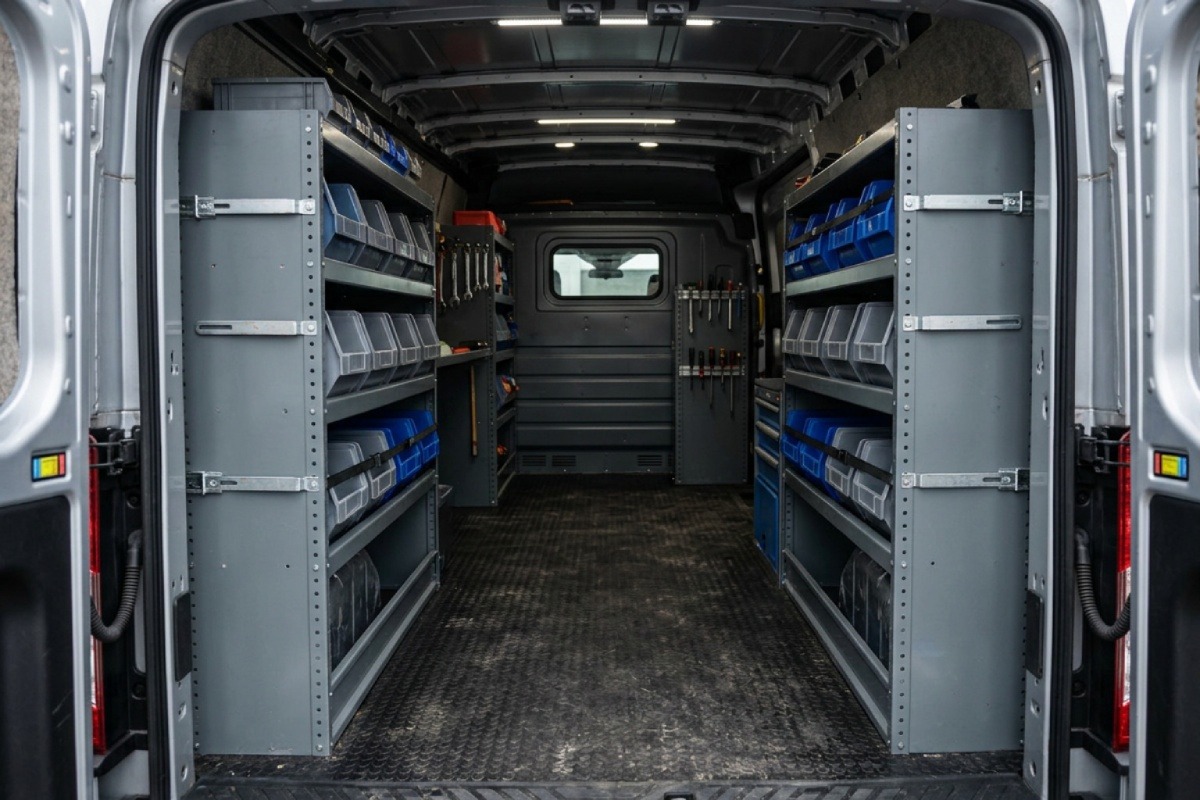
Organizing a stationary workshop is one thing; organizing a service vehicle that is constantly in motion is a completely different challenge. When a work van takes a sharp turn or hits a pothole, unsecured storage bins can become dangerous flying projectiles.
To solve this, commercial-grade van bins are designed with specialized secure-grip features. Many of our bins feature front lips that clip securely onto shelf edges, preventing them from sliding forward during transit.
If you are looking to maximize the storage efficiency of your work van, combining bins with drawer systems is highly effective. You can learn more about this in our guide on Van Storage with Stackable Drawer Units. For smaller parts organization, using compact options like our shallow Self-Stacking Bulk Storage Bin 16-1/2 L x 10-7/8 W x 3-1/2 H ensures that fittings and electrical connectors stay sorted and secured. For temporary commercial needs or heavy-duty relocation projects, renting specialized equipment from Plastic Moving Boxes & Dollies For Rent Free Delivery & Pickup is another excellent route to keep cargo safe on the road.
Best Practices for Assembly, Stacking, and Maintenance
To get the most out of your stacking storage bins and ensure a safe working environment, proper assembly and configuration are essential. At our company, we always emphasize safety first — whether you are working in our backyard in Lakewood, NJ, or managing a fleet in Houston, TX.
When setting up a freestanding bin system, using a dedicated rack is the safest way to prevent tipping. Our Self-Stacking Bulk Storage Bin Rack 23-1/2 D x 21-1/4 W x 48 H provides a heavy-duty steel framework that supports your stacked bins, keeping them perfectly aligned and structurally sound.
Safe Stacking Techniques and Weight Limits
To maintain structural integrity, always follow these three stacking rules:
- Keep the Center of Gravity Low: Always place your heaviest items (like brass fittings, heavy tools, or iron hardware) in the bottom bins. Reserve the top bins for lightweight items like zip ties, safety gear, or empty containers.
- Respect the Load Ratings: Never exceed the manufacturer's specified weight limit per bin. Overloaded bins will bow, compromising the interlocking lips and causing the entire stack to tilt.
- Engage Interlocking Lips: Ensure that every bin is fully nested and locked into the one below it. If a bin is sitting crookedly, the stack is unstable. Our professional line of Shelf and Bin Systems / Bins / Bin System / Self-Stacking Bins is specifically engineered with extra-deep nesting channels to guarantee a secure fit every time.
Organizing and Labeling for Maximum Efficiency
A stacking bin system is only as good as its organization. To save time and keep your workspace running smoothly, implement these quick sorting strategies:
- Color Coding: Use different colored bins to categorize parts. For example, use blue bins for electrical components, red for plumbing, and yellow for fasteners.
- Utilize Label Slots: Almost all high-quality stacking bins feature a molded front slot for labels. Use clear, printed labels so anyone on your team can locate parts instantly.
- Subdivide Your Bins: Don't let small parts mix together. By using Long Dividers for Self-Stacking Storage Bins, you can create multiple distinct compartments within a single bin, maximizing your organization without needing to buy more containers.
Ready to transform your workspace, warehouse, or service vehicle? Explore our full collection of professional-grade, American-made storage solutions and Explore Self-Stacking Bins to build your perfect setup today!