
Dodge Crew Van Specs and Real-World Dimensions Guide

Picture yourself standing in your driveway, wondering if a Dodge crew van will help with your profession, or if you can finally stop hunching over while loading gear. Industry data reveals a tragic pattern: DIY camper enthusiasts often realize too late that their ceiling is just short of standing height. Exact Dodge van dimensions require more than just glancing at a brochure-you need a true sense of scale to avoid disaster. If you're comparing dodge crew van specs with cargo or passenger setups, translate brochure numbers into driveway reality before you buy.
Making a vehicle purchase without confirming these measurements carries serious financial risk. According to experienced van outfitters, a mere three inches can be the difference between a perfectly tailored mobile workshop and a frustrating "for sale" sign.
Buyers frequently confuse a van's exterior driveway footprint with its actual interior livable space, leading to costly project delays and wasted materials.
Translating Dodge ram specifications into real-world space guarantees a successful build. To achieve this, rely on the "Household Anchor" method. Rather than memorizing confusing technical jargon, visualize Dodge van specs through familiar objects, like comparing cargo space to a standard sheet of plywood.
Finding the Sweet Spot: How Wheelbase Affects Your Turning Circle and Stability
Getting a longer van obviously means more cargo room, but it fundamentally changes how the vehicle drives. The secret lies in the wheelbase-the physical distance between the front and back wheels. When researching Dodge van dimensions, specifically the Ram ProMaster line, 118, 136, and 159-inch options dictate the physical length of the chassis supporting your gear
Maneuvering through a crowded grocery store lot depends heavily on this spacing. A longer stance creates a wider turning diameter, which is the total space needed to make a complete U-turn. To gauge parking maneuverability, consider these turning requirements:
- 118-inch wheelbase: 36-foot turning diameter (similar to a standard SUV).
- 136-inch wheelbase: 41-foot turning diameter (requires a bit more planning).
- 159-inch wheelbase: 47-foot turning diameter (difficult in tight cul-de-sacs).
Cruising down the interstate reverses this advantage. Longer 159-inch models absorb bumps better and offer the smoothest highway ride, while the shortest version might feel slightly bouncy.

Will it Fit in Your Garage: Measuring Exterior Width and Height Clearance
Bringing home a new van only to discover it scrapes your carport is an expensive reality. Knowing your absolute ceiling height is crucial, as a standard commercial car wash can quickly damage taller vehicles. When comparing Dodge Sprinter roof heights against modern ProMaster configurations, high-roof options easily exceed eight feet.
Even low-roof models push past seven feet tall, requiring constant vigilance around drive-thru overhangs and parking garages. Also remember that dodge ladder racks ladder carriers, and other dodge van accessories can raise overall height and width enough to cause unexpected scrapes.
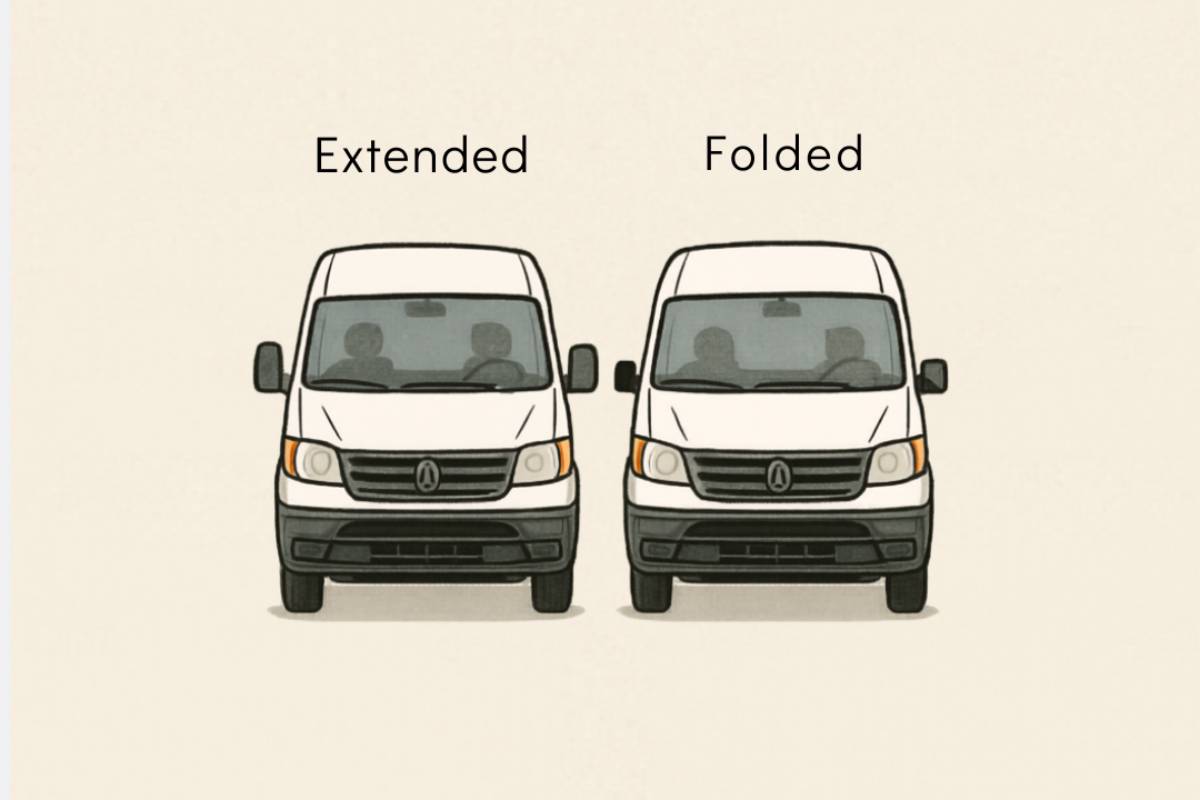
Side clearances introduce a spatial squeeze when parking near your home. The true Ram cargo van exterior width, including mirrors, spans over 82 inches-wide enough to clip suburban mailboxes if you aren't paying attention. Planning your driveway space using the mirrors-folded width measurement ensures precious inches of breathing room to comfortably walk past the vehicle carrying groceries or gear.
While many buyers naturally wonder if a full-sized commercial chassis will fit in a standard garage, the answer is a definitive no. Accepting that these larger vans must live outside allows you to fully utilize their towering exterior frames.
Can You Stand Inside? Check Interior Height for Cargo, Camper and Work Van.
Spending a weekend hunched over in your vehicle quickly makes a cramped workspace regrettable. When evaluating Ram ProMaster interior height clearance, the choice between a low roof (65 inches) and a high roof (76 inches) directly dictates daily comfort. A low-profile model offers stealthy parking, but navigating a mobile workshop with a bent neck causes physical fatigue. Conversely, a high roof creates a spacious environment where most adults can stand entirely upright.
Factory specifications rarely reflect reality once you customize the interior. Adding subfloors, heavy insulation, and cedar ceiling planks inevitably eats into available space, resulting in a vertical clearance loss of roughly four inches:
- Standard Low Roof: 65 inches factory → ~61 inches of finished headroom.
- High Roof: 76 inches factory → ~72 inches of finished headroom.
Map out this exact loss before finalizing a purchase to ensure you have the tallest starting canvas for your specific build needs.
The Plywood Metric: Maximizing Floor Length and Wheel Well Width
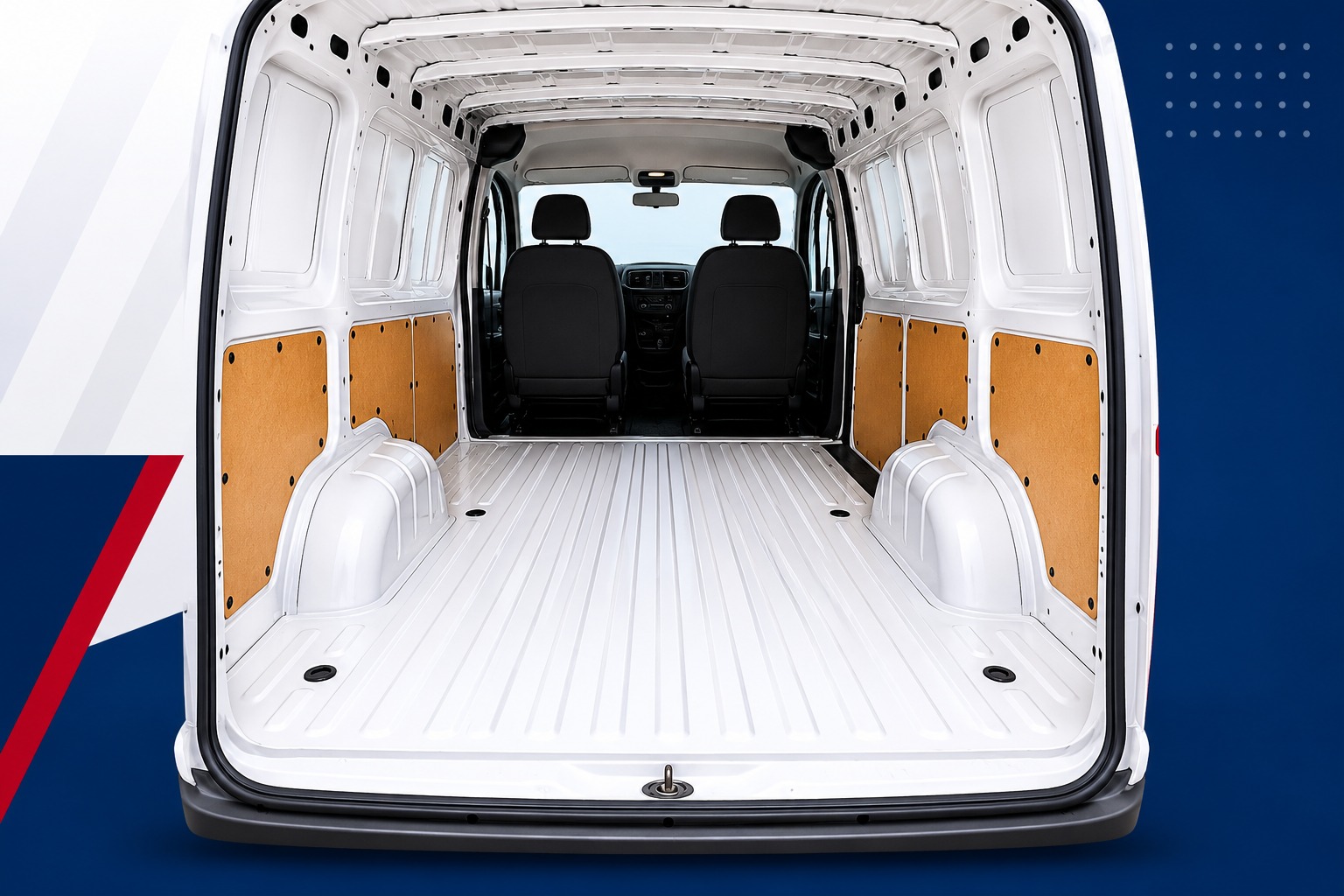
Determining if a new vehicle handles weekend projects usually comes down to one universal standard: the 4x8 sheet of plywood. The maximum floor length for hauling plywood varies across Dodge van specs, but even the shortest 118-inch wheelbase ProMaster offers just over eight feet of cargo floor length. You can slide standard building materials straight in and securely shut the rear doors without playing angled Tetris or strapping things to the roof.
Total width is deceiving until you account for the rear tires protruding into the cabin. Measuring cargo area for camper conversion projects requires recognizing that wheel well intrusion dictates your usable flat floor width. Modern configurations boast 56 inches between these wells, allowing heavy materials to lie perfectly flat. Meanwhile, the wall-to-wall space above the wheels stretches past 75 inches, uniquely accommodating a space-saving cross-coach sleeping arrangement for adults.
Entry and Exit: Why Door Openings Matter More Than Total Volume
Having a massive cargo area means nothing if bulky items get stuck in the doorway. Buyers often overlook aperture width-the actual size of the hole you load gear through. Parking strategies depend heavily on these measurements, as you must know exactly which doors can open fully in tight driveways without hitting fences or other cars.
To ensure specialized equipment actually fits into a Ram ProMaster, compare its two distinct entryways using suitable van partition
- Rear-swing doors: Opening a cavernous 61 inches wide, these are perfect for backing straight up to a garage.
- Sliding door entry width: Spanning 49 inches, this side entry sliding door van partition is ideal for tight curbside loading without swinging metal into passing traffic.
Daily comfort also relies heavily on step-in height, the distance from the pavement to the interior floor. Sitting at roughly 21 inches, it is impressively low, though you should evaluate the need for assist handles if climbing in repeatedly.
Beyond the Tape Measure: How Payload and GVWR Dictate Space Usage
Filling a van to the ceiling seems ideal, but available space rarely equals usable capacity. Buyers often focus on cubic feet while forgetting about gravity. Packing a custom camper with hardwood cabinets can easily max out structural limits long before you run out of physical room. This limit is the payload-the physical weight safely carried inside the empty cargo area.
To stay safe, calculate the Gross Vehicle Weight Rating (GVWR) for Dodge chassis models. This GVWR represents the absolute maximum the van can legally weigh, including the vehicle, passengers, and cargo. Subtracting the empty van's weight from this rating reveals your true payload capacity for heavy equipment hauling or elaborate DIY builds. Monitoring total interior weight prevents dangerous overloading. Outfitting with shelving and racks from suppliers such as American Van Equipment also adds weight, which should be included in your math.
Approaching the maximum weight limit physically alters a van's stance through suspension compression. Heavy loads press the springs downward, lowering rear step-in height while reducing crucial ground clearance underneath.
The Minivan Legacy: Measuring the Dodge Grand Caravan for Daily Utility
Moving from commercial job sites, the family driveway brings unique spatial challenges. Unlike hulking high-roof commercial vehicles, the Dodge Grand Caravan slips easily under standard seven-foot residential doors, delivering massive utility without parking anxiety. Among dodge mini vans, the Grand Caravan is a standout for easy parking. For reference, the 2017 Dodge Caravan passenger van shares similar exterior height and family-friendly utility.
That compact footprint hides remarkable interior flexibility. Folding the Stow 'n Go seating instantly transforms the cabin from a seven-passenger hauler into a completely flat loading deck. The cargo space specs expand dramatically as you adjust the layout:
- Behind the third row: 33 cubic feet (perfect for weekly groceries).
- Third row stowed: 33 cubic feet (perfect for weekly groceries).
- Both rows stowed: 33 cubic feet (perfect for weekly groceries).