
The Evolution of American Work Vans
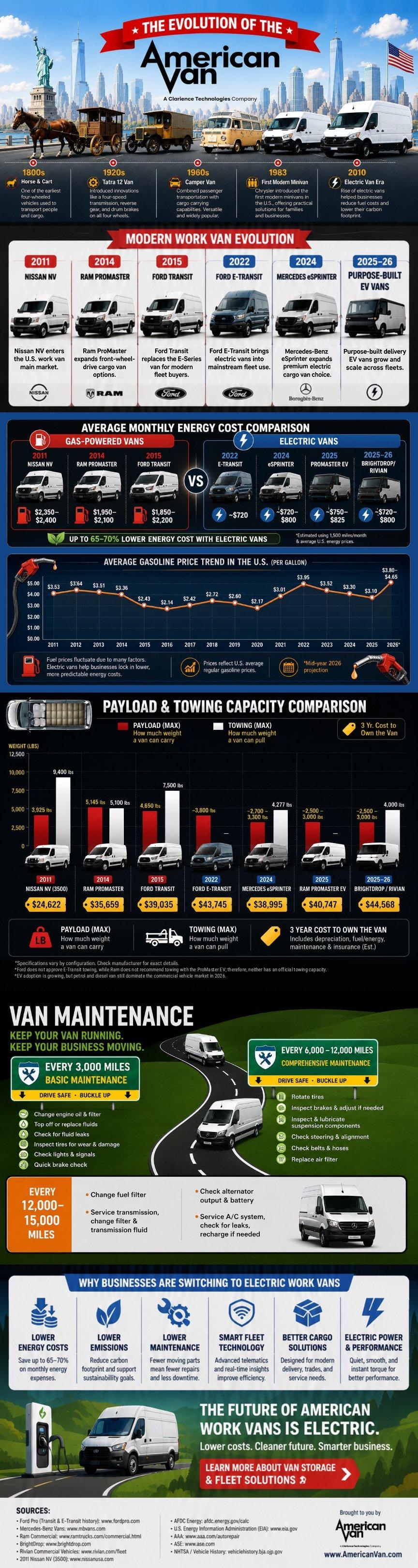
American work vans have evolved from early delivery vehicles into modern commercial vans built for contractors, service professionals, delivery companies, and fleets. Today’s models offer greater cargo capacity, efficiency, safety, and flexibility, while electric vans are becoming a growing part of the market. Horse-drawn delivery carts gradually gave way to motorized commercial vehicles in the early 20th century. Over time, vans became more practical and specialized for business use. Models such as the Nissan NV, Ram ProMaster, and Ford Transit expanded commercial van options, while newer electric vans like the Ford E-Transit and Mercedes-Benz eSprinter represent the next stage in work-van development.
Electric Work Vans: The Next Step in the Evolution of American Van
The modern work van era brought models such as the Nissan NV in 2011, the RAM ProMaster in 2014, and the Ford Transit in 2015. More recently, vehicles such as the Ford E-Transit and Mercedes eSprinter have introduced electric powertrains to the commercial van market.
These developments have given trade professionals and fleets more choices when selecting and upfitting their work vans. American Van's vehicle-specific storage solutions and ladder racks have evolved with these changes, helping professionals organize tools, equipment, and materials in vehicles such as Ford Transit vans and RAM ProMaster vans.

With rising fuel costs and demand for more sustainable work vehicles, the introduction of the Ford E-Transit, Mercedes eSprinter, and other electric vans gives fleets ways to reduce their carbon footprint. Electric vans also offer features suited to modern trade and service needs, making them a great choice for commercial fleets.
However, this does not mean demand for traditional gasoline and diesel work vans will go away. There will always be a need for higher towing capacity in industries with heavy loads and longer distances to travel.
No matter what type of engine your fleet uses, keeping a work vehicle on the road still comes down to regular upkeep. Routine service, inspections, and maintenance help reduce unplanned downtime and make sure crews can get to the next job with the tools and equipment they need.
The Future of American Work Van
Commercial vans continue to evolve with improvements in efficiency, safety, connectivity, and vehicle technology across electric, gasoline, and diesel models. Each option offers different advantages depending on how the van is used. Ultimately, the right work van depends on a business’s routes, workload, payload needs, operating conditions, and budget.
.
FAQs
1 - What Should businesses consider when choosing a work van?
Payload, towing capacity, range, fuel or electricity costs, charging availability, maintenance, and daily operating requirements should all be considered.
2 - Why are gasoline and diesel vans still popular in 2026?
They provide quick refueling, longer-range flexibility, established servicing networks, and proven capability for demanding commercial applications.
3 - Do electric vans require less maintenance?
Generally, yes. They have fewer engine-related maintenance requirements, although brakes, tires, suspension, batteries, and other components still need regular inspection.
4 - What features do modern work vans offer for trade professionals?
Modern work vans offer different roof heights, wheelbases, cargo configurations, and upfit options to suit different trades. Newer models also include features such as advanced driver assistance, cameras, connectivity, and onboard power for tools and equipment.
5 - How do payload and towing capacity affect the choice of a work van?
Payload and towing capacity are important considerations for trades transporting heavy tools, equipment, or trailers. These ratings vary between models and configurations, so check the manufacturer’s specifications against the loads you regularly transport. For example, the 2026 RAM ProMaster offers up to 4,750 pounds of payload and 6,910 pounds of towing capacity, while the ProMaster EV offers up to 3,170 pounds of payload
6 - Do electric work vans cost less to run than gasoline or diesel vans?
Electric vans generally have fewer moving mechanical parts and don't require oil changes, which can reduce routine maintenance costs. The actual savings depend on electricity and fuel prices, mileage, charging access, and the type of work the van is used for.
7 - What is the difference between payload capacity and towing capacity?
Payload capacity is the amount of weight a van can carry inside the vehicle, including passengers, tools, shelving, and equipment. Towing capacity is the maximum weight the vehicle can safely pull using a trailer.
8 - How does van upfitting affect payload capacity?
Shelving, partitions, ladder racks, flooring, drawers, and other equipment add weight to the vehicle. Businesses should account for the weight of the upfit when determining how much additional cargo the van can safely carry.