
Ford Transit and Van Models
Is your small business growing faster than your car’s trunk space? You start looking for a work van and see the name "Ford Transit" on vehicles that look completely different. For a florist, a plumber, or a growing family, picking the wrong one is an expensive mistake. This confusion is common, as Ford’s van lineup is split into two distinct families designed for very different jobs.
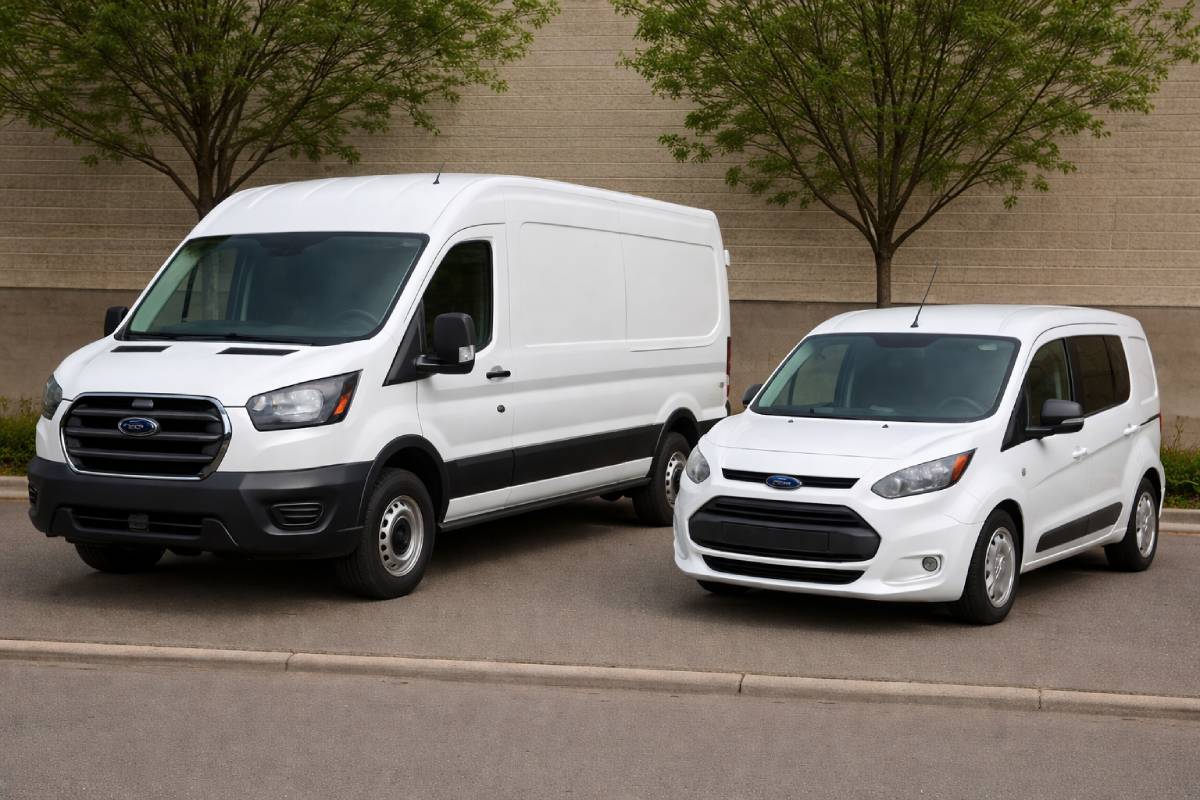
Think of the small, city-friendly Transit Connect as the nimble little brother. Built on a car-like frame, it’s easy to park, fits in a standard garage, and is perfect for lighter loads. The full-size Ford Transit is the big brother;a powerhouse of space built for serious cargo, large crews, or ambitious camper conversions. Your first decision between these two options is the most important one you'll make.
This guide will help you answer three key questions about what you carry, where you drive, and who you carry to pinpoint the best van for your needs. You'll soon know exactly which Ford model fits your small business or personal adventures.
What's Your Van's Job? Cargo, Passenger, or Crew
The next question is simple: what will you put inside it? Ford designs its vans with three layouts to choose from:
- Cargo Van: For STUFF. It’s an empty box with two front seats, offering the most space for equipment, packages, or materials.
- Passenger Van: For PEOPLE. Lined with rows of seats, it’s designed to transport large groups comfortably, with seating for up to 15 people in the full-size Transit.
- Crew Van: For a TEAM + STUFF. A hybrid model with a second row of seats for up to five people, plus significant cargo room in the back.
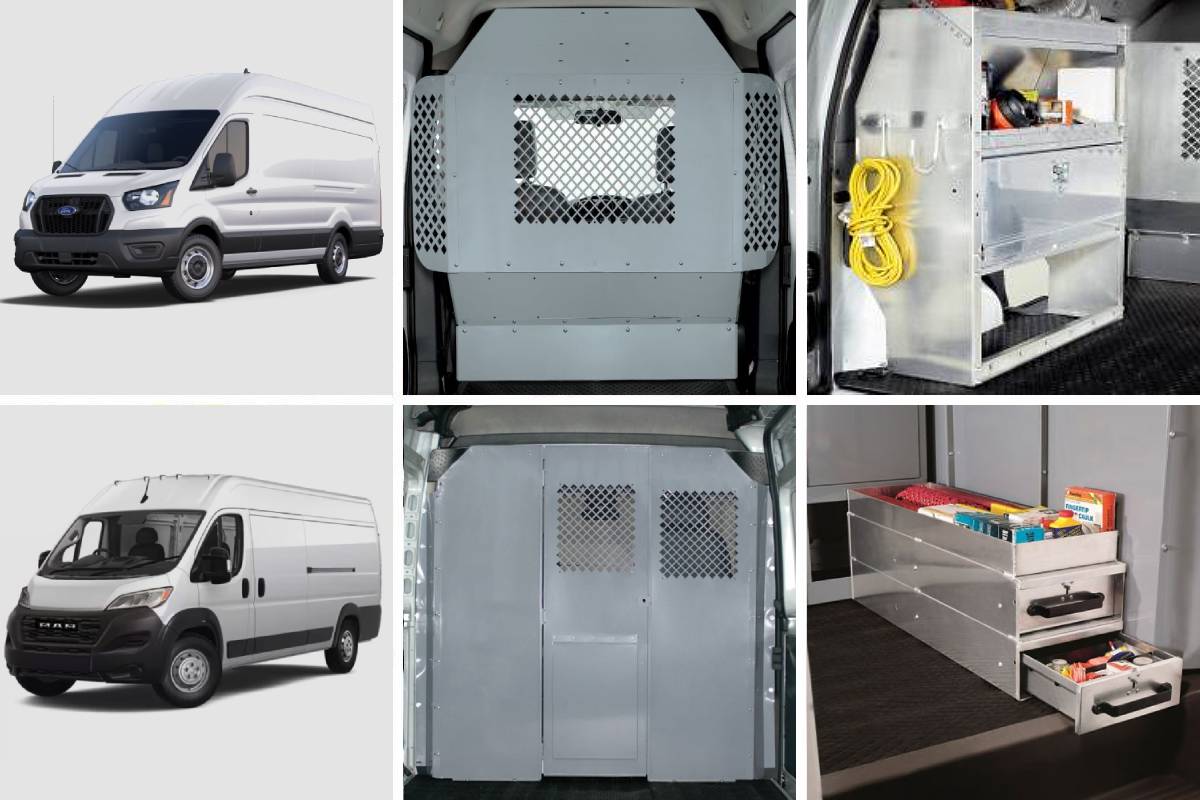
For business owners like plumbers or caterers, the Cargo Van is a blank canvas that can be customized with Ford Transit accessories to better organize tools and equipment. If your goal is moving people, the Passenger Van is the obvious choice. The Crew Van masterfully splits the difference—perfect for a work crew that needs to travel to a job site with both their team and their gear, eliminating the need for a second vehicle.
Sizing Up the Full-Size Transit: Roof Height and Length
Choosing a full-size Ford Transit means you can decide the actual shape of the vehicle. The two most important choices are roof height and body length.
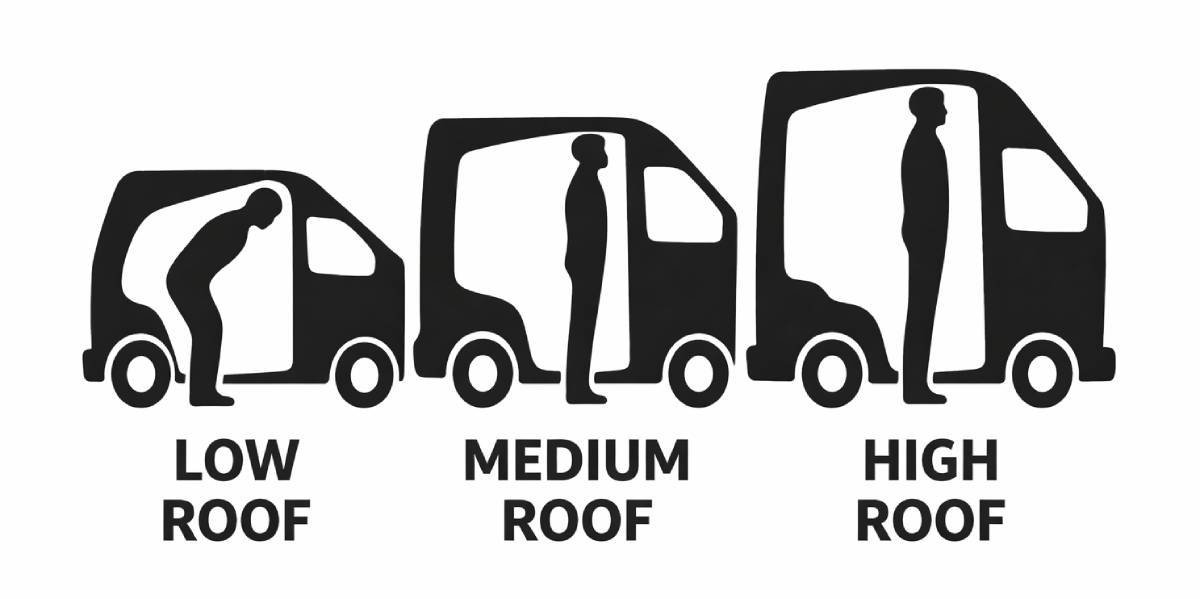
The Transit offers three roof heights. Low roof, medium roof, and high van roof.
The Low Roof is the most discreet and is the only one that typically fits in a standard residential garage. The Medium Roof gives you generous headroom for crouching, while the High Roof is a game-changer, allowing most adults to stand up completely. This makes it ideal for anyone working inside their van or building a camper.
Ford also offers Regular, Long, and Extended body lengths. While a Regular length is more nimble for city parking, the Long and Extended models are essential for businesses that need to haul 8-foot-long materials like plywood sheets or pipes. A longer van means more space but also requires more care when maneuvering.
Powering Your Work: Gas, Electric (E-Transit), or AWD
How do you want to power your van? The standard gasoline engine is the familiar workhorse, offering the flexibility to refuel anywhere and tackle long, unpredictable road trips. For most users, the gas engine remains the most versatile choice.
For businesses with a predictable daily routine, the all-electric Ford E-Transit presents a compelling alternative. It’s designed for drivers who cover a similar distance each day within a set territory and can plug in at night, making it perfect for local delivery services.
You can also choose how that power gets to the road with All-Wheel Drive (AWD). A Ford Transit AWD provides significantly better grip and control on snowy, icy, or rain-slicked roads. If you operate in a four-season climate, this option adds a crucial level of safety and capability.
What Do the Numbers Mean? Transit 150 vs. 250 vs. 350
You’ve likely seen Transits with numbers like 150, 250, or 350 on the side. These numbers indicate the van's payload class: how much weight it's built to carry.
A Transit 150 is perfect for lighter-duty work, like a florist or painter. The Transit 250 is the most common all-around workhorse, ideal for plumbers or electricians who need to haul heavier tools. For the most demanding jobs, the Transit 350 offers the highest payload capacity, designed for contractors carrying pallets of material or for conversion into a shuttle bus.
The main difference between the Transit 150 vs. 250 vs. 350 models is the suspension. The 350 has a much stiffer suspension to handle more weight, which is great when loaded down but can feel more bumpy when driving empty.
Is the Ford Transit a Good Camper Van Base?
The Ford Transit is a top choice for "van life" builders, primarily because of its high-roof option. This feature allows most people to stand up straight inside, which makes cooking, changing, or just hanging out far more comfortable.
Beyond interior space, the Transit holds another key advantage: available All-Wheel Drive (AWD) straight from the factory. While other vans require expensive aftermarket work to power all four wheels, Ford offers it as a standard option. For builders, the path is simple: start with a Cargo van. It’s a blank slate that allows for complete creative freedom.
When comparing the Ram ProMaster vs. Ford Transit, reliability and long-term repair costs often become a deciding factor. However, the ProMaster's lack of a factory AWD option often pushes adventurers in four-season climates toward the Transit.
A Quick Look at the Competition: Transit vs. Ram ProMaster
The Ram ProMaster is another popular work van, but it differs fundamentally in its drivetrain. The ProMaster uses front-wheel drive (FWD), pulling the van from the front. The Ford Transit is primarily rear-wheel drive (RWD), pushing the van from the back like a pickup truck.
This creates a major trade-off. Because the ProMaster doesn’t need a driveshaft running to the back, it has a noticeably lower cargo floor, making it easier to load. The Transit’s RWD setup, however, generally provides better balance and traction when the van is loaded down with heavy equipment or is being used for towing. The Transit also holds a significant weather advantage with its factory AWD system, a feature the ProMaster doesn't offer.
What About Used Vans? The Ford E-Series (Econoline)
If you're browsing the used market, you’ll encounter the Ford Transit’s predecessor: the Ford E-Series, or Econoline. For decades, these vans were tough, budget-friendly workhorses.
However, that lower price comes with trade-offs. They are known for poor gas mileage and a rougher ride than a modern Transit. Most importantly, the E-Series was never offered with the tall roof options that make the Transit so popular. If your dream is a camper you can stand up in, you need a Transit. The E-Series is a solid, affordable option for basic hauling, but newer Ford van models offer a world of comfort, efficiency, and space that it can't match.
Your 4-Step Ford Van Checklist
You can now confidently pinpoint the exact model that fits your life, business, or adventure. Walk through this decision-making process to cover all the bases before you buy.
- Start with Size: Do you need a city-friendly Transit Connect or a spacious full-size Transit?
- Define the Job: Is it for Cargo, Passengers, or a Crew?
- Pick Your Space: Choose your Roof Height and Length (for full-size Transit).
- Select Your Power: Gas, E-Transit, or add AWD for weather?
Now you're ready to explore Ford van shelving ideas and upfits concepts that will perfectly match your vision. Business owners might also explore Ford Pro Telematics, a system that helps track a fleet's location and health. You’re no longer just looking for a van; you’re building a partner for the job ahead.